Search our wide range of hotels, golf courses and locations below.
Play Green, Be Green
Have the same fun but be a little greener
We’re all hearing more about (and experiencing) climate change. Being golfers, we appreciate nature and want to protect it. Not only for us but our families and future generations.
Tourism employs hundreds of millions of people and it’s a hugely important source of income for many countries and people. The big question is how do we balance the pleasure of our holidays and the benefits of tourism, with our increasing awareness of the environment.
Having spent a considerable amount of time recently studying and talking to qualified environmental specialists, the good news is that being aware doesn’t mean we can’t have fun! It just means we have to be more aware of our decisions and how subtle differences can make a positive impact. Transport (28%) is of course a big contributor to pollution but no bigger than the consumption of electricity. Agriculture accounts for 9% of emissions but many independent experts claim that figure to be higher once the consumption of water and deforestation is considered.
I eat meat but was shocked to learn that it takes over 15000 litres of water to produce 1 kilogram of beef (this figure varies greatly depending on how and where the cows are raised and to which expert you listen to) – however, one thing is for sure, the more local the meat, the lesser the environmental impact. Chocolate production is even thirstier! Chicken, dairy products and vegetables are far kinder to Mother Nature and I was delighted to learn than wine and beer are tiny consumers of water by comparison!
Typical values for the volume of water required to produce common foodstuffs
Foodstuff
Quantity
Water consumption, litres
Chocolate
1 kg
17,196
Beef
1 kg
15,415
Sheep Meat
1 kg
10,412
Pork
1 kg
5,988
Butter
1 kg
5,553
Chicken meat
1 kg
4,325
Cheese
1 kg
3,178
Olives
1 kg
3,025
Rice
1 kg
2,497
Cotton
1 @ 250g
2,495
Pasta (dry)
1 kg
1,849
Bread
1 kg
1,608
Pizza
1 unit
1,239
Apple
1 kg
822
Banana
1 kg
790
Potatoes
1 kg
287
Milk
1 x 250ml glass
255
Cabbage
1 kg
237
Tomato
1 kg
214
Egg
1
196
Wine
1 x 250ml glass
109
Beer
1 x 250ml glass
74
Tea
1 x 250 ml cup
27
Source: IME
I’m not a vegetarian and don’t intend to become one but by changing what I eat, I know I can make a little difference without affecting my fun. Multiply that difference by all the “consumers” around the world, in addition to what the governments are now promising to do (better late than never!) and we’ll see a positive change.
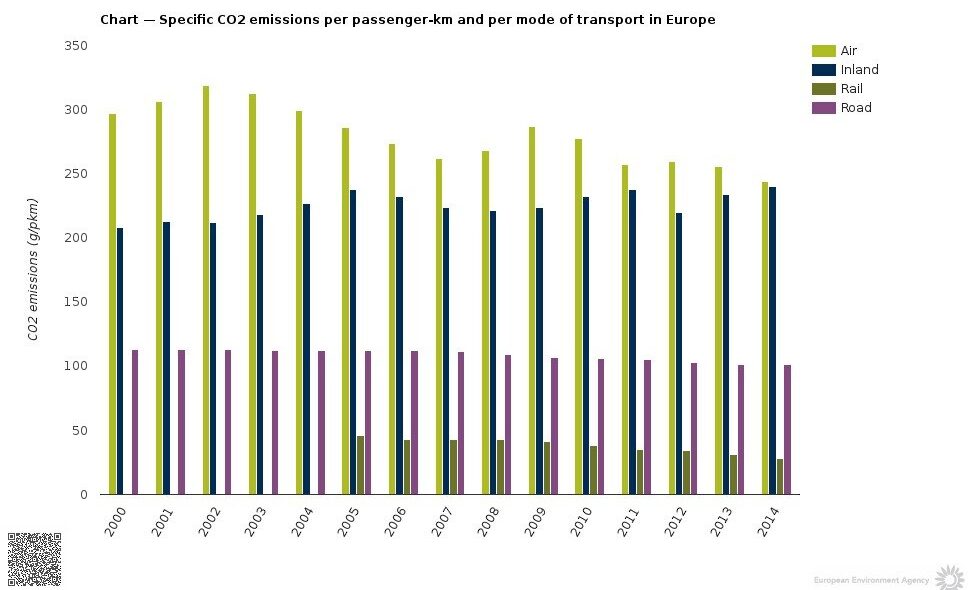
Travel-wise, flying is 250% more polluting than taking your car and travelling by train is extremely efficient (although not very practical when you’ve got golf bags!). We’re lucky in the UK to have so many fabulous destinations within driving distance. And taking our own car means we’ve got space in the boot to bring back the local goodies!
Ways To Lower Your Environmental Impact
Eat and drink local
Cut out the huge impact of trans-Ocean transportation and concentrate on the local produce. I’ve always found that local tastes better anyway. How could something prepared weeks previously, frozen and then shipped taste better than something raised locally?
Eat produce in season
Why pay more for less taste. Thanks to growing techniques, a lot of fruit and vegetables can be grown nearly throughout the year anyway but ask the restaurant about the origin of the produce and make an informed decision.
Self-drive holidays instead of Fly
Take as much luggage as you want and take time to explore – try a two- or three-centre touring holiday. You don’t need to drive too far to experience great culture and scenery and a touring holiday can be as active or as relaxing as you want it to be.
Choose white meat and fish over red meat
This will be the hardest thing for me to do and I’m still going to order some organic local beef or lamb if it’s on the menu but the days of ordering an Argentinian steak from my local gastro-pub are over. Chicken and fish are delicious anyway!
Eat more vegetables and fruit
It’s incredible to think that a piece of chocolate takes 20 times more water to produce (and many more production and transport processes) than an apple. Most of us consume more calories than we’re supposed to but we all like to eat! So instead of having an extra-large piece of meat have a smaller piece and ask for more vegetables on the plate, and instead of having a chocolate bar, have a piece of fruit.
Switch off the light behind you
If no one is in the room, the light doesn’t need to be on. The hotel industry estimates that it consumes over 30% more electricity than necessary due to hotel residents leaving lights on in an empty bedroom. While some hotels are doing their part by putting in “All lights out” switches and bulbs with motion detectors, we can all help with a flick of the switch.
Reduce your towel usage
I’m sometimes staggered at the number of towels in a hotel bedroom. There seems to be an unwritten rule that the more luxurious the hotel, the greater number of towels is needed. To me, the quality of service is far more important than having a five face towels! Just be aware that the towels don’t all have to be used.
Health and monetary benefits
Interestingly enough, not only do all of the above steps reduce our individual “carbon foot print” but many of them will save you money and improve your health. I’ve certainly noticed that my shopping costs have decreased and feel a little lighter and fitter too. It’s a win-win situation!
Going Forward
More golf courses are introducing new grasses (or re-introducing old ones such as rye) which consume less water, and hotels (some more than others) are doing their best to be eco-friendly so as to satisfy concerned clients and to keep their costs down. If you’re keen to play and stay at these “greener” golf courses and hotels, let me know and I’ll provide more detail on suitable places at your preferred destination.